
Is coaching about asking powerful questions
or
is it about providing structure and direction?
In my initial coaching training, I learned that coaches don’t give structure or guidance. The emphasis was on staying curious and trusting that the client leads the conversation. I leaned heavily into that approach, and I saw how much my clients benefited from it.
Powerful questions slow people down.
They create insight that feels owned.
And because the insight is theirs, clients believe in it more deeply.
I went on to complete further training, this time encountering the opposite extreme: a kind of recipe book coaching, with clearly defined steps and frameworks to follow.
I was also confronted with very different client experiences.
I was meeting people who arrived exhausted.
Overwhelmed.
Stuck in careers that had drained them for years.
What I began to notice was this: when someone is already feeling flat, endless open questions can feel like another burden. Instead of helping them make sense of their habits and patterns, the noise got louder. Many turned that confusion inward, telling themselves, “I should know this by now. Everyone else seems to.”
That’s when my perspective about ‘blank canvas’ coaching vs structure began to shift.
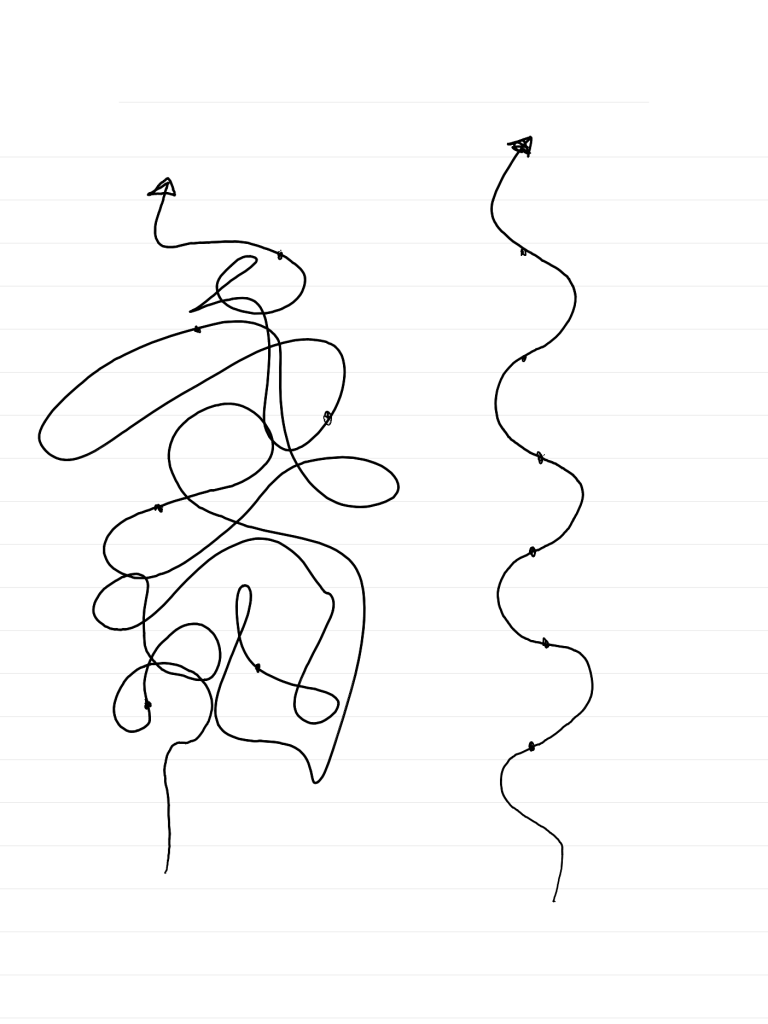
I came to see that structure, when used well, doesn’t replace thinking or growth. It can support it. Questions and structure don’t compete — they work powerfully as a team.
For me, structure isn’t about telling clients what to do or where to go. It’s about offering an access point. A way to organise thoughts. A framework that invites thinking.
Questions still sit at the heart of everything I do.
They just land differently when there’s a sense of direction holding them.
When we treat questions and structure as mutually exclusive, something gets lost. Structure without inquiry becomes rigid, like following a recipe focused on a particular outcome. Inquiry without structure can feel overwhelming and inaccessible for people.
Good coaching, at least as I experience it, is responsive. Some sessions call for spaciousness and silence. Others need grounding, mapping, and practical actions. The art lies in knowing what’s needed in the moment, and in truly understanding what serves the client best.
f this sparked something for you, you can find more about how I work on my website.
 Career change coaching